
Ford Transit Custom MK2 Suspension Guide: Springs, Coilovers, Anti-Roll Bars or Lift Kits?
Choosing suspension for a Ford Transit Custom MK2 starts with how you use the van. A daily work van, weekend camper and road-focused build can need very different solutions. Lowering springs, coilovers, anti-roll bars and lifting springs each change a different part of the driving experience.
This guide covers the new-generation Transit Custom V710, commonly described as the 2023-on or 2024-on MK2. It is not a fitment guide for the previous-generation Custom.
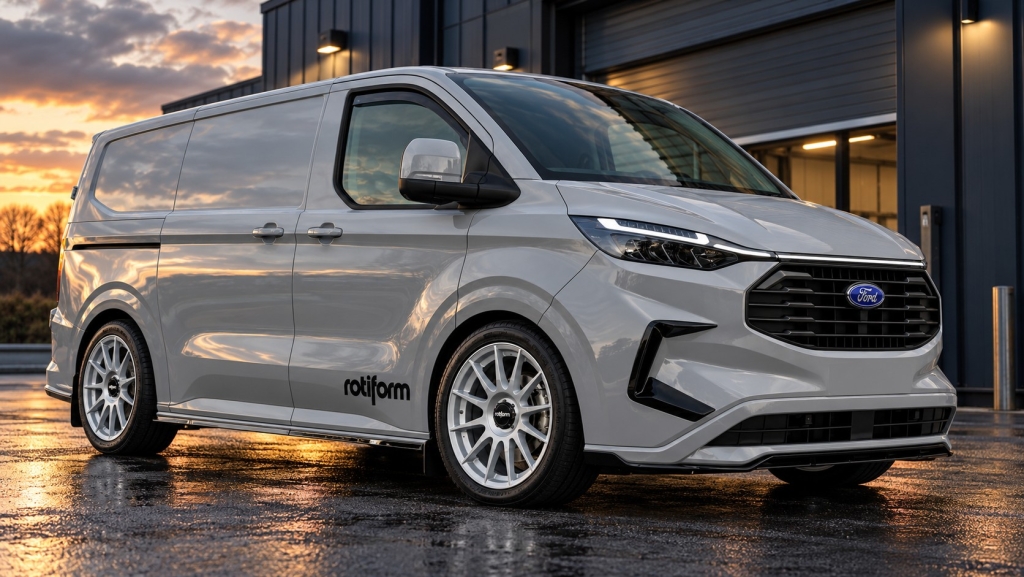
Which suspension upgrade suits your Transit Custom?
| Upgrade | Main purpose | What to consider |
|---|---|---|
| Lowering springs | A fixed reduction in ride height | Correct spring specification, damper condition and clearance |
| Coilover suspension kit | Ride-height adjustment within an approved range | Vehicle approval, setup, installation and maintenance |
| Anti-roll bars | Change roll stiffness and handling balance | Front-only versus matched front/rear specification |
| Pro-Lift springs | Increase ride height and ground clearance | Exact application, lift figures and vehicle load |
Lowering springs: a fixed-height option
Lowering springs are a useful starting point when you want a lower stance without adjustable spring platforms. The resulting ride height depends on the kit, factory suspension and load. A quoted drop is an approximate change from the specified reference vehicle, not a guaranteed wheel-arch gap.
Our H&R Transit Custom MK2 spring listing brings six 28532-series kits together with a comparison table. The range is advertised at approximately 30mm front and 50mm rear lowering, but the spring combinations differ. Wheelbase and seating alone are not enough to select the correct part.
Lowering can reduce available clearance and change ride comfort. Springs do not repair worn dampers, and a lower van is not automatically a better-riding van. Check the condition and suitability of the existing dampers before fitting.
Coilovers: more control over ride height
A coilover suspension kit is worth considering if you want to set the ride height within a defined adjustment range. It is a more involved purchase than a spring-only kit, so include installation, alignment and correct setup in your budget.
The H&R 45534-1 twin-tube kit is listed with 25–55mm front and 50–70mm rear lowering for approved applications. The supplier lists short and long wheelbase versions with up to three seats; the exact vehicle still needs checking against the approval documents.
Height adjustment does not automatically mean adjustable damping. Stay within the approved height range and check wheel, tyre and suspension clearance. Choosing the lowest setting simply for appearance can leave too little clearance for the way a working van is used.
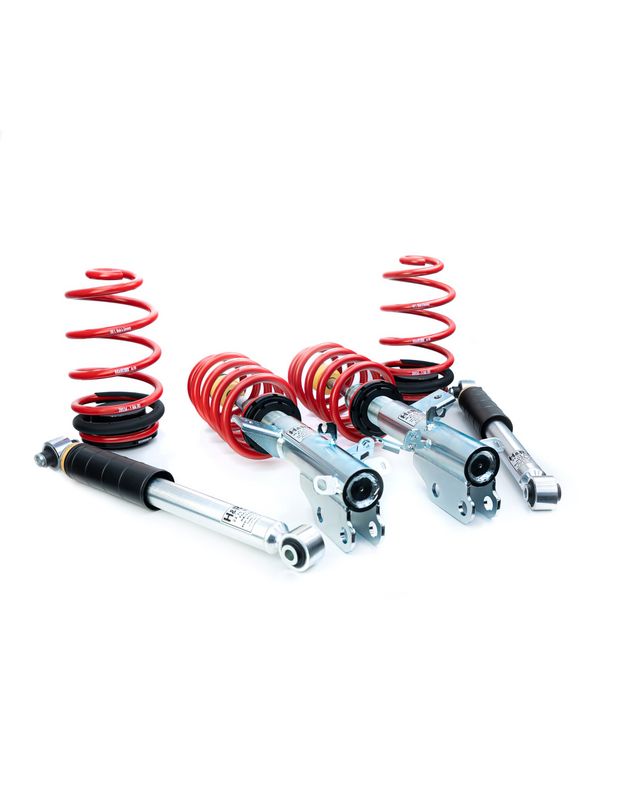
Anti-roll bars: address body roll without choosing a lower ride height
Anti-roll bars resist the difference in suspension movement between the two sides of an axle. They change roll stiffness and handling balance rather than serving as a ride-height adjustment. They can therefore be relevant when you want to address cornering behaviour while retaining your current spring height.
We list the H&R 33532-1 front anti-roll bar and the H&R 33532-2 front and rear kit separately. These are different purchases: the front-only listing does not include a rear bar.
Front and rear changes affect balance differently. A stiffer front bar alone can increase understeer, so avoid treating every bar upgrade as an identical handling improvement. Confirm mounting requirements and the condition of associated parts during installation.
Lift springs: when ground clearance matters more than a lower stance
For uneven access roads or a build where clearance matters, raising the van may suit your needs better than lowering it. The Eibach E30-35-065-02-22 Pro-Lift-Kit is a front and rear lifting spring set for selected applications.
Lift amounts vary with body type, factory specification and load. Use the current vehicle-specific application information rather than a generic lift figure. Additional ride height does not increase the manufacturer’s permitted axle weights or payload, and a lift kit does not make every van suitable for demanding off-road use.
Check these details before ordering
- Exact model, model year and body type: panel van, double cab, passenger van or camper conversion.
- Engine and drivetrain: diesel, AWD, PHEV or fully electric.
- Wheelbase, seating and any factory sports or rough-road suspension.
- Plated axle loads and permanent equipment such as furniture, water tanks and tools.
- Wheel and tyre specification, clearance and how the van is normally loaded.
Do not transfer a diesel fitment assumption to a PHEV or electric model. Likewise, a kit approved for one seating or load specification may not cover another. Our H&R spring listing includes kit-specific guidance and exclusions; use it alongside the current approval documents.
What about the new VW Transporter T7?
Some suspension products are listed for both the Transit Custom V710 and the new Transporter T7, but shared-platform models do not make every component interchangeable. Check the individual product application. Do not confuse the new Transporter with the earlier T7 Multivan, or assume that approval extends to every Caravelle, drivetrain or camper conversion.
After fitting: alignment and clearance
Budget for a professional installation and wheel-alignment check after changing springs or a suspension kit. The installer should check the relevant clearances, suspension travel and any vehicle-specific requirements for headlights or assistance systems. Assess the van in its normal loaded condition as well as empty.
Frequently asked questions
Are coilovers always better than lowering springs?
No. Springs may suit a fixed-height build, while coilovers offer ride-height adjustment within their approved range. The better choice depends on the vehicle, desired result and budget.
Will lowering springs improve comfort?
Not necessarily. Spring specification, dampers, tyres, available travel and load all affect comfort. Discuss your priorities before choosing a kit.
Can anti-roll bars lower my van?
They are not designed to set ride height. Their purpose is to change roll stiffness and handling balance.
Which H&R 28532 spring kit do I need?
Use the comparison table as a starting point, then confirm the exact vehicle and load specification against the approval. Do not choose by wheelbase or seat count alone.
Get the right setup for your van
Browse Transit Custom MK2 suspension upgrades or contact RTECSHOP with your vehicle details and what you want to change. We can help confirm the application and discuss installation pricing and workshop bookings.
Recent Posts
-
Jaecoo J7 Body Styling Guide: Splitters, Spoilers & Side Steps
Product Information30.10.2026 -
Ford Transit Custom MK2 Suspension Guide: Springs, Coilovers, Anti-Roll Bars or Lift Kits?
Product Information29.10.2026 -
Renault 5 E-Tech & Alpine A290: Lowering Springs or Coilovers?
Technical28.10.2026 -
OZ Racing Wheels: Why They Make Sense for Road and Track
Product Information27.10.2026 -
Revealed: Milltek Design Alpine A290/R5 Widearch Kit
Product News13.07.2026
Browse by Category
Browse by Date
- October 2026
- July 2026
- May 2025
- March 2025
- February 2025
- December 2024
- November 2024
- February 2024
- January 2024
- December 2023
- November 2023
- October 2023
- September 2023
- August 2023
- July 2023
- June 2023
- March 2023
- December 2022
- November 2022
- October 2022
- September 2022
- August 2022
- July 2022
- June 2022
- April 2022
- December 2021
- November 2021
- October 2021
- August 2021
- July 2021
- June 2021
- April 2021
- January 2021
- December 2020
- November 2020
- October 2020
- September 2020
- August 2020
- July 2020
- June 2020
- May 2020
- April 2020
- March 2020
- February 2020
- January 2020
- November 2019
- October 2019
- July 2019
- June 2019
- April 2019
- January 2019
- October 2018
- August 2018
- July 2018
- June 2018
- May 2018
- April 2018
- March 2018
- February 2018
- January 2018
- December 2017
- November 2017
- October 2017
- September 2017
- August 2017
- July 2017
- June 2017
- May 2017
- April 2017
- January 2017
- December 2016
- November 2016
- August 2016
- July 2016
- June 2016
- May 2016
- March 2016
- February 2016
- January 2016
- November 2015
- May 2015
- April 2015
- April 2014
- April 2013
- April 2012
- April 2011